
Editorial and clinician review pending. This content is for general information and is not personal medical advice.

Editorial draft — medical review pending. This article is for general information and is not personal medical advice.
ONDA in Seoul is a consultation-led discussion about microwave technology, a proposed treatment area, and whether the plan fits your goals and medical context. It is not an ultrasound treatment, and the name alone does not confirm the handpiece, protocol, local authorized purpose, or likely outcome for an individual. For visitors to Daybeau Clinic Myeongdong Signature, the most useful starting point is to understand what the device is designed to do, then ask clear questions about the actual plan before scheduling around travel.
Published material on the ONDA Coolwaves platform focuses mainly on body concerns such as localized adiposity, cellulite, and skin laxity. That scope matters. A body-treatment study should not be used as a promise about facial lifting, a specific result, or how long any effect may last. Consultation is the place to discuss the proposed area, medical history, alternatives, and aftercare.
Key Takeaways
- ONDA is DEKA’s Coolwaves microwave technology at 2.45 GHz with contact cooling; it is not ultrasound.
- Manufacturer materials describe Deep and Shallow handpieces for different body-focused applications, including submental treatment. The installed handpiece and intended local use must be confirmed at consultation.
- The available literature is encouraging but largely focused on body contouring and acknowledges that longer-term, comparative research is still needed.
- If you are visiting Seoul, share your travel dates and follow-up availability before deciding on any energy-based treatment.
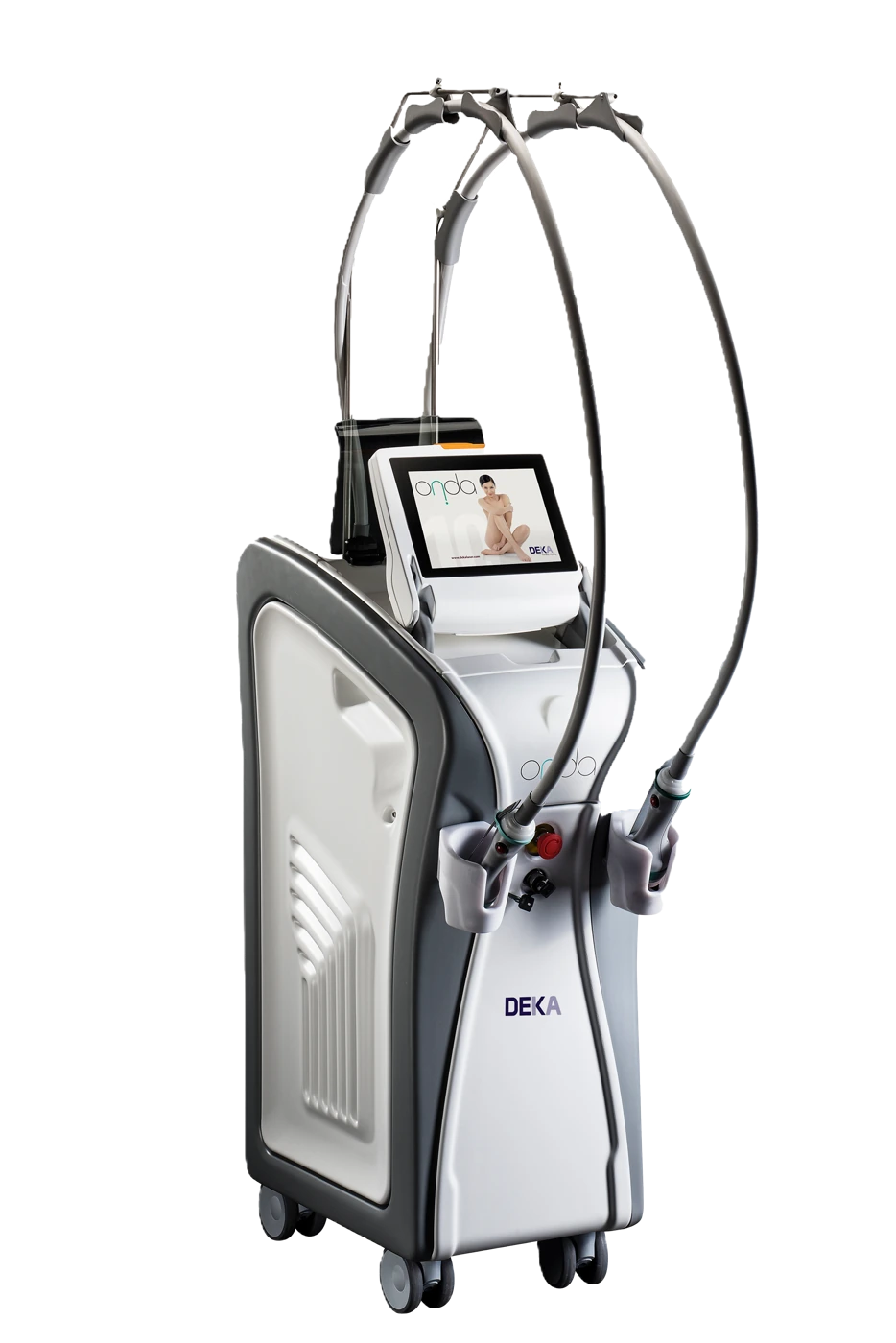
Product images supplied by the clinic. They identify device models and do not show treatment results.
What ONDA is—and what it is not
ONDA is a microwave-based platform made by DEKA. The manufacturer identifies the technology as patented Coolwaves operating at 2.45 GHz and describes contact cooling as part of the handpiece design. This is an important distinction for anyone comparing treatment names in Seoul: ONDA is not microfocused ultrasound, and it should not be described as an ultrasound lifting treatment (DEKA ONDA product information).
The basic technology label, however, does not answer every decision-making question. It does not identify the exact equipment installed at a particular clinic, the handpiece proposed for you, the energy settings, or whether a particular treatment purpose is locally authorized. It also does not tell a clinician whether the approach is appropriate for your anatomy, health history, prior procedures, or priorities. Those are individual questions, not facts that can be inferred from a branded device name.
The mechanism is also not a substitute for an outcome. A 2024 expert review describes the platform in the context of noninvasive approaches for localized fat, cellulite, and skin laxity, while noting that long-term efficacy and safety evaluation remains incomplete (Hoffmann et al., 2024). That is a useful reason to ask for a balanced explanation of evidence rather than treating a marketing term as a guarantee.
Treatment areas: why the handpiece and purpose matter
A treatment area should be discussed before a treatment name. DEKA’s current product page describes two handpieces, Deep and Shallow, and lists body-focused applications. The page identifies Deep with localized fat and describes Shallow for cellulite, skin tightening, and submental treatment; it also lists areas such as the abdomen, knees, hips, buttocks, and underarms (DEKA ONDA product information).
That manufacturer description is not a clinic-specific treatment menu or an automatic recommendation. “Submental” does not mean that every face or neck concern should be approached in the same way, and it does not establish that an individual’s desired facial outcome is realistic. Ask which handpiece is being considered, the intended purpose for your proposed area, and why that plan is being discussed for you.
“Lifting” may refer to skin laxity, submental fullness, or lower-face contour. Clarify the concern before assuming that a treatment seen online is a match. If a different energy modality is being considered, the clinic’s pages on Ultherapy consultation, Thermage consultation, and XERF consultation can help frame useful questions about those separate technologies.
What the current evidence can—and cannot—tell you
The available ONDA literature is most relevant to body contouring questions, not a blanket claim about facial lifting. The 2024 review of ONDA Coolwaves literature covers localized adiposity, cellulite, and skin laxity. It describes integrated cooling and different applicators, but it also states that long-term efficacy and safety data are still missing and calls for larger randomized trials with longer follow-up (Hoffmann et al., 2024).
The evidence helps explain the platform, published protocols, and questions worth asking. It cannot turn early or short-term findings into a promise about a specific person, treatment area, or durable result. It also cannot replace a clinical assessment of whether a person’s goals and health factors fit the plan.
A separate observational study of a microwave system for localized adiposity illustrates why study design matters. The study followed adults receiving body treatment and reported limitations including no control group, a small sample, limited male representation, and a need for longer-term evaluation (Ruiz-Rosas et al., 2023). Its findings are part of the broader body-contouring evidence; they should not be carried over as proof of facial treatment effectiveness.
A good consultation should distinguish three things: what the device manufacturer says the platform and handpieces are designed to do; what published studies actually evaluated; and what a clinician thinks is reasonable for your situation. Keeping those categories separate makes it easier to recognize when a claim has become broader than its source.
How to prepare for an ONDA consultation in Myeongdong
Bring a clear description of the concern you want to discuss rather than only the treatment name. You may want to explain the area that bothers you, what you hope to change, any previous aesthetic procedures, and whether you are comparing ONDA with another approach. Reference images can communicate a preference, but they should not be treated as a forecast of your own result.
It is sensible to disclose relevant health information, including implants, prior procedures in the area, medications, allergies, and any history that could affect suitability. The clinic’s verified treatment information specifically advises discussion of implants, medical history, heat-related skin reactions, and individual suitability. A person should not assume that a treatment is appropriate simply because it is noninvasive.
Use the consultation to seek concrete answers:
- What exact ONDA handpiece and treatment area are being discussed?
- What is the proposed purpose, and what evidence is relevant to that purpose?
- Is the clinic describing body contouring, cellulite, skin laxity, submental treatment, or something else?
- What discomfort, skin reactions, aftercare, and follow-up considerations are relevant to the proposed plan?
- What alternatives could address the same concern, and why might they be considered?
The clinic is about a one-minute walk from Euljiro 1-ga Station, Exit 6, at B1, 84 Namdaemun-ro, Jung-gu, Seoul. Location can make a consultation convenient, but convenience should not compress the decision. Confirm the exact device details and what you would need to do after treatment before committing the rest of your itinerary.
Risks, limitations, and when not to rely on an online guide
Microwave energy is a heat-based modality, so heat-related skin reactions, temporary redness, and sensitivity are practical topics to discuss. The verified clinic evidence also flags implants and individual medical history as reasons to assess suitability rather than presume it. Contact cooling is part of the platform description, but it does not remove the need for individualized planning or make a procedure risk-free (DEKA ONDA product information).
Do not use this guide to decide that you are a candidate or to predict a result. A short online description cannot assess the condition of the skin and underlying tissue, review your health record, compare alternative treatments, or establish the appropriate plan. The research also does not justify a promise of a particular degree of change, number of sessions, or duration of effect.
Ask what normal recovery expectations are for the proposed area and plan, and make sure you understand the clinic’s contact process for questions after your visit. If a symptom feels unexpected or concerning to you during travel or after returning home, seek timely medical evaluation rather than relying on social media or a general guide. This is particularly important when an in-person reassessment may be needed.
Travel planning for visitors to Seoul
International visitors should build flexibility into the decision, even for a treatment described as noninvasive. Share your arrival date, the time you have in Seoul, your preferred consultation date, and whether you can realistically return for follow-up if asked. A consultation request is not a confirmed medical appointment, so it is wise not to base a flight, event, or tight travel plan on an assumed treatment schedule.
Avoid treating the final days of a trip as the only possible window. Your clinician may want to discuss timing in light of the proposed area, the aftercare plan, your tolerance for temporary redness or sensitivity, and access to support after you leave Korea. If you have a photoshoot, wedding, flight, or long day of sightseeing planned, mention it rather than assuming that the treatment will fit without consequence.
Bring your questions in writing and keep a record of the agreed plan, including who to contact after your visit. For a broader checklist on communication, itinerary timing, and visit planning, see the clinic’s related travel guide listed below. The goal is not to make a rushed choice while on holiday; it is to leave room for a clear, informed conversation.
Deciding between ONDA and other options
ONDA is one technology conversation among several. It should not be ranked against ultrasound or radiofrequency solely by social-media labels, nor should a body-contouring evidence base be presented as interchangeable with every lifting claim. The difference in energy type, intended treatment area, available handpiece, evidence base, and your own goals may all matter.
If your priority is a lifting-focused discussion, an individual assessment may include other energy-based options. Ultherapy is associated with microfocused ultrasound with visualization, while Thermage and XERF are described as monopolar radiofrequency technologies. Those pages are not endorsements of a particular option; they are starting points for learning the right questions. Exact device generation, tip or handpiece, local purpose, protocol, risks, and suitability still need confirmation.
For concerns that involve volume, contour, skin quality, or a procedure rather than energy, the alternative may be something different altogether—or no procedure at that time. A responsible consultation can include the possibility that an approach is not a fit. The useful outcome is a plan you understand, not a branded name selected before the assessment.
Arrange a consultation after you have the right questions
If you are considering ONDA while visiting Seoul, begin with a conversation about the precise area and purpose you want to discuss, your medical history, the device and handpiece proposed, and the practical limits of the evidence. Daybeau Clinic Myeongdong Signature can use that information to discuss availability and next steps; submitting a request does not confirm an appointment.
For information about communicating with the clinic as an overseas visitor, visit International Patients.
Sources cited
DEKA ONDA product information — manufacturer description of Coolwaves technology, handpieces, and stated applications.
Hoffmann et al., 2024 — expert review of ONDA Coolwaves body-contouring, cellulite, and skin-laxity literature; includes stated evidence limitations.
Ruiz-Rosas et al., 2023 — observational microwave body-contouring study and its stated limitations.
Sources
- DEKA: ONDA product information
Manufacturer description of ONDA Coolwaves microwave technology, 2.45 GHz source, handpieces, cooling, and stated body-focused applications.
- Recommendations of the ONDA Coolwaves International Advisory Board: A Review of the Literature
Published review of ONDA Coolwaves body-contouring, cellulite, and skin-laxity literature, including the stated lack of long-term efficacy and safety evaluation.
- Microwave System: A Novel Treatment for Localized Adiposity: A Cross-Sectional Study
Observational microwave body-contouring study design and its stated limitations, including lack of a control group and the need for longer-term evaluation.
Frequently asked questions
Is ONDA an ultrasound treatment?
No. ONDA is described by DEKA as Coolwaves microwave technology at 2.45 GHz with contact cooling. Ultrasound and microwave treatments use different forms of energy, so it is important not to treat their names or evidence as interchangeable.
Can ONDA be used for the face or under the chin?
DEKA’s product page lists a Shallow handpiece for submental treatment among its stated applications. That does not establish that every facial or neck concern is suitable for ONDA. Ask the clinic to identify the actual handpiece, intended purpose, relevant evidence, local considerations, and alternatives for your proposed area.
What should I ask before scheduling ONDA in Seoul?
Ask which handpiece and treatment area are being considered, what the plan is intended to address, what evidence applies, and what risks, aftercare, and follow-up arrangements are relevant. Share relevant medical history, implants, prior procedures, and travel dates before a plan is made.
Does research prove long-lasting results from ONDA?
No specific result or duration can be promised from the available literature. The 2024 review of ONDA Coolwaves research notes that long-term efficacy and safety evaluation is still needed. Published body-treatment findings should not be treated as a guarantee for another area or an individual result.