
Editorial and clinician review pending. This content is for general information and is not personal medical advice.
A skin-clinic visit can fit naturally into a Seoul trip when you plan it as healthcare, not as an errand squeezed between sightseeing stops. The useful first step is a consultation that considers your concerns, health information, travel dates, and ability to obtain aftercare. It is also the moment to confirm exactly what, if anything, is appropriate for you. A treatment name, a social-media trend, or a friend’s itinerary cannot do that work.
For international visitors, good planning means leaving room for questions and change. You may decide that a consultation is enough for this trip. You may need to adjust a proposed date or choose not to proceed. That is a sound outcome, not a failed itinerary. At Daybeau Clinic Myeongdong Signature, the consultation conversation begins with your priorities and travel plans; a request is not a confirmed medical appointment.
Key Takeaways
- Plan a clinic consultation around your Seoul schedule, but do not pre-commit to a procedure before an individual assessment.
- Ask for the exact product, device model, intended purpose, risks, alternatives, and aftercare plan—not just a treatment name.
- Keep flexible time in your itinerary and make a follow-up or local-care plan before traveling home.
- For injectable treatments, understand that uncommon complications can be serious; know how to contact the clinic and where to seek care if you are concerned.
Start with a consultation, not a predetermined treatment
A worthwhile medical-tourism guide to Korea starts with a simple distinction: travel convenience does not establish treatment suitability. Your clinician needs to understand what you hope to address, relevant health history, prior aesthetic procedures, allergies or sensitivities, current medicines or supplements, and the dates you will be in Korea. Those details can change whether a treatment should be discussed, how it would be planned, or whether another approach makes more sense.
You do not need to arrive with a diagnosis or a fixed request. It is more useful to describe the concern in plain language and bring examples only if they help explain an aesthetic preference. Ask the clinician to explain the proposal in equally plain terms. A clear consultation should identify the proposed area, the technology or product under consideration, the expected practical commitments, the limitations, and the alternatives. It should also make clear what is not known until an in-person assessment.
Daybeau Clinic Myeongdong Signature is at B1, 84 Namdaemun-ro, Jung-gu, Seoul, about a one-minute walk from Euljiro 1-ga Station Exit 6. That central location can make a consultation easy to reach, but it should not turn a health decision into a rushed stop between activities. Allow enough time to arrive calmly, ask questions, and understand the next step before you make any choice.

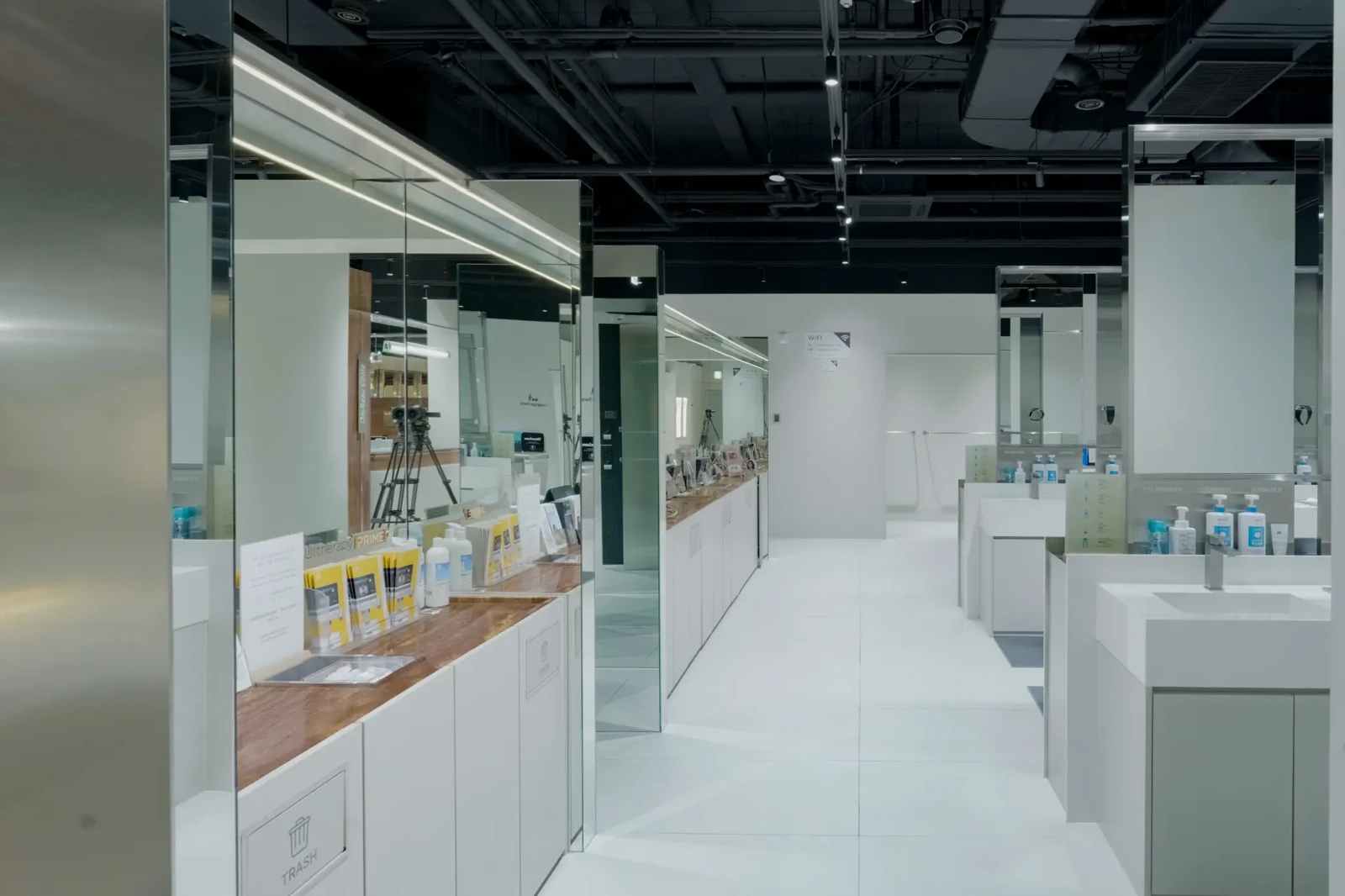
Actual clinic interior photograph; not a patient or treatment result.
If your concern is skin quality, for example, a skin booster consultation can be the right place to clarify the exact injectable being discussed and whether it fits your travel plans. If lifting is your interest, the same principle applies: a device or procedure may be discussed, but the individual plan comes after assessment.
Build flexibility into the Seoul itinerary
The safest travel plan is not a universal recovery calendar. Energy-based treatments, injectables, and thread procedures can involve different practical considerations, and the appropriate timing depends on the precise plan and the person receiving it. Do not treat another traveler’s timeline, a package description, or an online post as clearance for your flight, sauna visit, workout, long walking tour, or other activity. Ask the treating clinician how the proposed plan relates to your own itinerary.
A sensible approach is to schedule the consultation early enough in the trip that you can consider the information without pressure. Keep the day around the visit light when possible. Avoid building a tightly timed airport transfer, all-day excursion, photo shoot, or special event around a procedure you have not yet discussed. If a plan changes after the consultation, your trip should still work well.
The U.S. Centers for Disease Control and Prevention advises people seeking planned care abroad to discuss how complications would be addressed, consider the availability of follow-up care, check insurance coverage, and request medical records in English for later care. It also notes that traveling in the recovery period can add considerations, particularly after surgery. This is general public-health guidance, not a personal travel clearance; your clinician is the appropriate person to discuss the plan proposed for you. 2
For a short Seoul stay, ask direct logistical questions before deciding: Is a review visit anticipated? Who should you contact if you have a concern after leaving the clinic? What information should you take home? Is the plan reasonable in light of your departure date? A clinic should be able to explain its follow-up process without promising a particular outcome or an exact duration of effect.
Bring information that supports a careful decision
The most helpful preparation is a concise, accurate health and treatment history. Make a private note for the consultation with the names and dates of relevant prior procedures, known allergies or reactions, current prescriptions and supplements, and any medical conditions you think may matter. Bring prior treatment records when you have them. This is not a request to self-diagnose; it is a way to help the clinician ask better questions.
It is also worth separating a booking request from clinical disclosure. Daybeau’s request form asks for visit and contact information and specifically asks patients not to include medical records, sensitive health details, or photos there. Those details are better shared through the appropriate clinic process when the team explains how they will be used.
Prepare a short question list. Good questions include:
- What exactly is being proposed, and why might it suit my stated concern?
- What device model, handpiece, product, or thread type would be used?
- What is the product’s or device’s intended purpose locally, and are there reasonable alternatives?
- What risks, limitations, and aftercare considerations apply to this plan?
- What should I do if I need help after I return home?
For injectables, identifying the exact product matters. The U.S. Food and Drug Administration advises consumers to know the product being injected, where it will be injected, and the possible risks, and to discuss questions with the treating provider. 1 That is a useful standard for an international consultation even though product regulation and labeling can differ by country.
A treatment name is not a treatment plan
Popular treatment labels can hide important differences. An energy-based treatment name alone does not confirm the installed model, tip or handpiece, settings, treatment area, local authorized purpose, or the protocol a clinician may propose. Nor does it establish that the same approach is appropriate for every traveler. Ask the clinic to confirm these details rather than inferring them from online descriptions.
The word “Titanium” deserves particular care. Alma describes Soprano Titanium as a diode laser hair-removal platform using 755, 810, and 1064 nm wavelengths. In Korea, “Titanium lifting” may be used as a marketing term in a different context. The two should not automatically be treated as the same manufacturer-authorized facial-lifting purpose, and hair-removal studies do not establish facial-lifting effectiveness. Before considering a Titanium consultation, ask for the exact model, the intended use for your plan, the local indication, and the evidence relevant to that use. 3
The same disciplined questions apply to other discussions. Ultherapy is associated with microfocused ultrasound with visualization, while Thermage is associated with monopolar radiofrequency. ONDA is a microwave technology, not ultrasound. XERF is described as a monopolar radiofrequency platform. These distinctions help you frame questions, but they are not a recommendation or a prediction of results. Exact equipment, proposed purpose, individual suitability, and aftercare need clinic confirmation.
Injectable contouring needs the same level of specificity. Do not assume that shoulder filler is a standard, approved, or universally safe option. Its appropriateness depends on individual anatomy, the proposed product and use, local considerations, alternatives, and clinical assessment. If you are exploring a procedure with recovery and follow-up needs, discuss those needs directly in a thread lifting consultation rather than assuming every thread procedure is alike.
Understand risks, limitations, and what to do with concern
Aesthetic care can be elective, but it is still medical care. No clinic can responsibly guarantee a result, a particular degree of change, or how long an effect will last. General website information cannot determine personal suitability. A consultation may lead to a different treatment discussion, a later date, or a decision not to proceed.
For dermal fillers, the FDA lists bruising, redness, swelling, pain, tenderness, itching, and rash among common risks. Less common risks include infection, nodules or granulomas, allergic reaction, open or draining wounds, and tissue necrosis. The FDA also warns that unintended injection into a blood vessel, while uncommon, can cause serious and potentially permanent complications, including tissue death, stroke, or blindness. 1 These are reasons to ask informed questions, not reasons to assume that any particular complication will happen.
Before you leave the clinic, ask how to contact the team, what the aftercare instructions mean for your specific plan, and which concerns warrant urgent assessment. If you feel unwell or are concerned about a possible complication during your trip or after returning home, do not postpone appropriate medical care. CDC guidance for medical tourists similarly emphasizes not delaying care when a complication is suspected. 2
You should also ask where follow-up would happen if you have already returned home. A responsible travel plan includes a route for urgent care in Seoul if needed and a plan for sharing procedure information with a local healthcare professional later. It does not rely on an assumption that a short trip eliminates the need for continuity of care.
Organize the travel details that are easy to overlook
Confirm your passport, visa, entry, and arrival-document requirements through the relevant official authorities for your nationality before you travel. Requirements can change, and a clinic article cannot confirm immigration eligibility. Separately, check your travel and health insurance terms; do not assume cosmetic or elective care, complications, changes to travel, or care outside your home country are covered.
Keep your contact details reachable while in Seoul and make sure you can access your hotel address, local transport options, and the clinic address without depending on a single device. Pack enough of your regular medication for the trip and use the consultation to disclose what you take. If language support or accessibility matters to you, raise that before your visit so the clinic can explain what communication is available rather than making an assumption.
After a procedure, retain the treatment summary and any written aftercare or product/device information the clinic provides. CDC specifically recommends obtaining copies of overseas medical records in English and sharing them with healthcare professionals involved in subsequent follow-up. 2 Those records are practical continuity-of-care information; they are not a substitute for an assessment if you need one.
A good Seoul visit is one that remains manageable if your clinical plan changes. Give yourself permission to make the consultation the main outcome, to keep sightseeing flexible, and to leave only when you understand the next steps. That protects both your health decisions and the trip you came to enjoy.
If you would like to discuss your concerns, travel dates, and the questions you want answered in Seoul, Request a consultation. The form is a consultation or visit request, not a confirmed appointment.
References
Sources
- FDA: Dermal Filler Do's and Don'ts for Wrinkles, Lips and More
Filler product-identification questions, common and less common risks, and the rare but serious risk of unintended injection into a blood vessel.
- CDC Yellow Book: Medical Tourism
Pre-travel planning, follow-up and complication planning, insurance considerations, English medical records, and not delaying care for suspected complications.
- Alma Lasers: Soprano Titanium Special Edition
Manufacturer description of Soprano Titanium as a 755/810/1064 nm diode laser hair-removal platform; this URL was supplied in the verified treatment evidence.
Frequently asked questions
Should I book a treatment before arriving in Seoul?
It is reasonable to request a consultation before your trip, but a request is not a confirmed medical appointment or a commitment to treatment. The exact plan, if any, should follow an individual assessment of your goals, health information, and travel schedule.
How should I plan a clinic visit around my flight home?
Tell the clinician your arrival and departure dates before deciding on a plan. Ask about follow-up, aftercare, travel considerations, and who to contact if you have concerns after leaving Korea. A general online timeline cannot determine what is appropriate for you.
What should I ask about a device or injectable product?
Ask for the exact model or product, its proposed use, the treatment area, relevant risks and limitations, alternatives, and aftercare. For injectables, it is important to know what product is proposed and where it would be used.
Does ‘Titanium lifting’ mean the same thing as the Soprano Titanium hair-removal platform?
Not necessarily. Alma describes Soprano Titanium as a diode laser hair-removal platform. The phrase ‘Titanium lifting’ can be used differently in Korea, so confirm the exact model, purpose, local indication, and evidence for the proposed use during consultation.