
Editorial and clinician review pending. This content is for general information and is not personal medical advice.
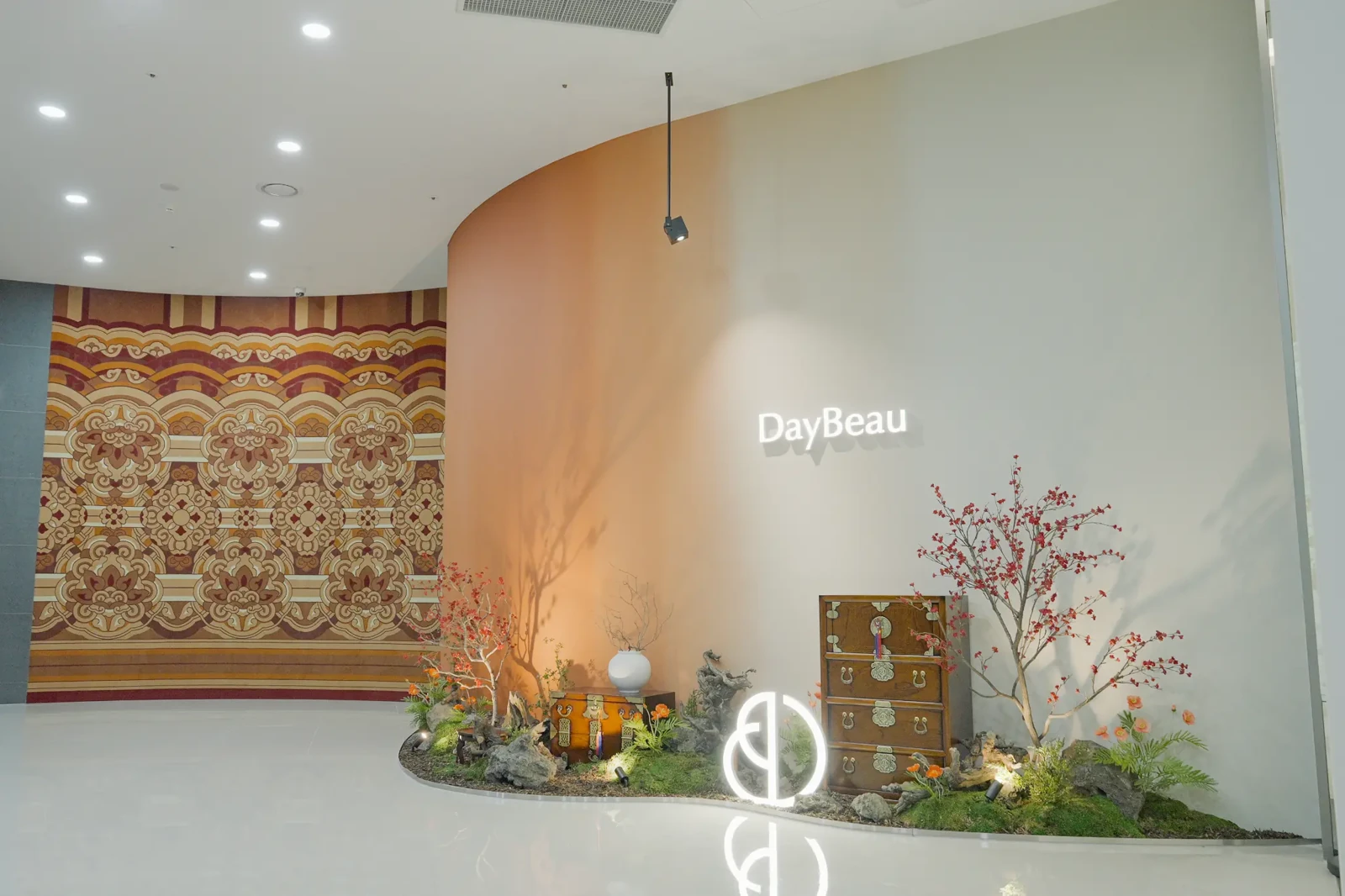
Planning a Korea skin clinic consultation in Myeongdong is most useful when you treat it as a decision-making visit, not a commitment to a treatment menu. Start with the concern you want to discuss, the time you will spend in Seoul, and the questions you need answered about the proposed product or device. At Daybeau Clinic Myeongdong Signature, the consultation is intended to begin with those priorities, your travel plans, and your comfort—not with an assumed treatment.
For international visitors, the best outcome from a first visit may simply be clarity: what the clinic is proposing, why it may or may not fit your concerns, what alternatives exist, and what time or follow-up it may require. Use the International Patients information and your consultation request to set out the basics in advance. A request is not a confirmed medical appointment, and treatment suitability, product details, local indications, and risks all need an individual clinical assessment.
Key Takeaways
- A useful Korea skin clinic consultation identifies your concern, the exact proposed product or device, its intended purpose, and reasonable alternatives before you decide.
- Foreign visitors should share their Seoul dates and plans for follow-up early; a short itinerary can change whether a treatment conversation is practical.
- A treatment name is not enough. Ask for the model, product, treatment area, local authorized purpose, expected aftercare, and limitations that apply to your proposed plan.
- Injectables and energy-based procedures have risks. The right next step after a concern or warning sign is prompt clinical assessment, not an online diagnosis.
Begin with a consultation, not a treatment menu
A clinic visit is more productive when the conversation starts with the result you are hoping to understand rather than a brand name you saw online. “I want my skin to look less tired,” “I am considering lip shape,” or “I want to understand non-surgical lifting options” gives the clinician a clearer starting point than asking for a named procedure without context. Be ready to explain what bothers you, when you first noticed it, and what you have tried or had done before.
A consultation should also make room for a decision not to proceed. Some goals may be better addressed with a different approach, at another time, or not while you are traveling. That is not a failed consultation. It is the value of having a plan based on your individual history, anatomy, proposed treatment area, and schedule rather than a generic promise.
At Daybeau Clinic Myeongdong Signature, recommendations are discussed after an individual assessment. The clinic describes its setting as consultation-led, with discussion of skin, contour, and lifting care rather than a treatment assumed in advance. General website information cannot tell you whether a particular plan is appropriate for you.
Prepare a short, useful brief before you arrive in Seoul
The practical preparation is simple: collect the information that changes a consultation. Put it in a short note you can read from your phone. Include the areas you want to discuss, your previous relevant treatments, medication or allergy information you believe is relevant, and your dates in Korea. Do not rely on photographs or social-media labels alone to identify a treatment.
Describe priorities, not an idealized result
Bring one or two priorities in plain language. It may help to mention whether you are interested primarily in skin quality, a contour concern, or a lifting conversation. If you bring reference images, use them to explain a preference, not as a promise that another person’s appearance can be reproduced. Your clinician should assess what is appropriate for your own anatomy and circumstances.
It is also reasonable to say what you do not want: for example, a plan that requires follow-up after you have left Korea, an injectable conversation while you are uncertain about the product, or a treatment scheduled too close to an important event. This kind of clarity helps the discussion stay realistic.
Share history that could affect the discussion
Tell the clinic about prior procedures in the area you want to discuss and any relevant health history, medications, allergies, implants, skin reactions, or active skin concerns. The purpose is not to self-screen or self-diagnose. It is to make sure the clinician has the context needed to decide what questions to ask next.
For injectable filler discussions, product and site matter. The U.S. Food and Drug Administration notes that filler uses and risks vary by product and injection site, and advises patients to discuss the specific product and its labeling with a qualified clinician (FDA: Dermal Fillers). U.S. FDA information does not establish Korean authorization, but it is a useful reminder not to treat “filler” as one uniform product or procedure.
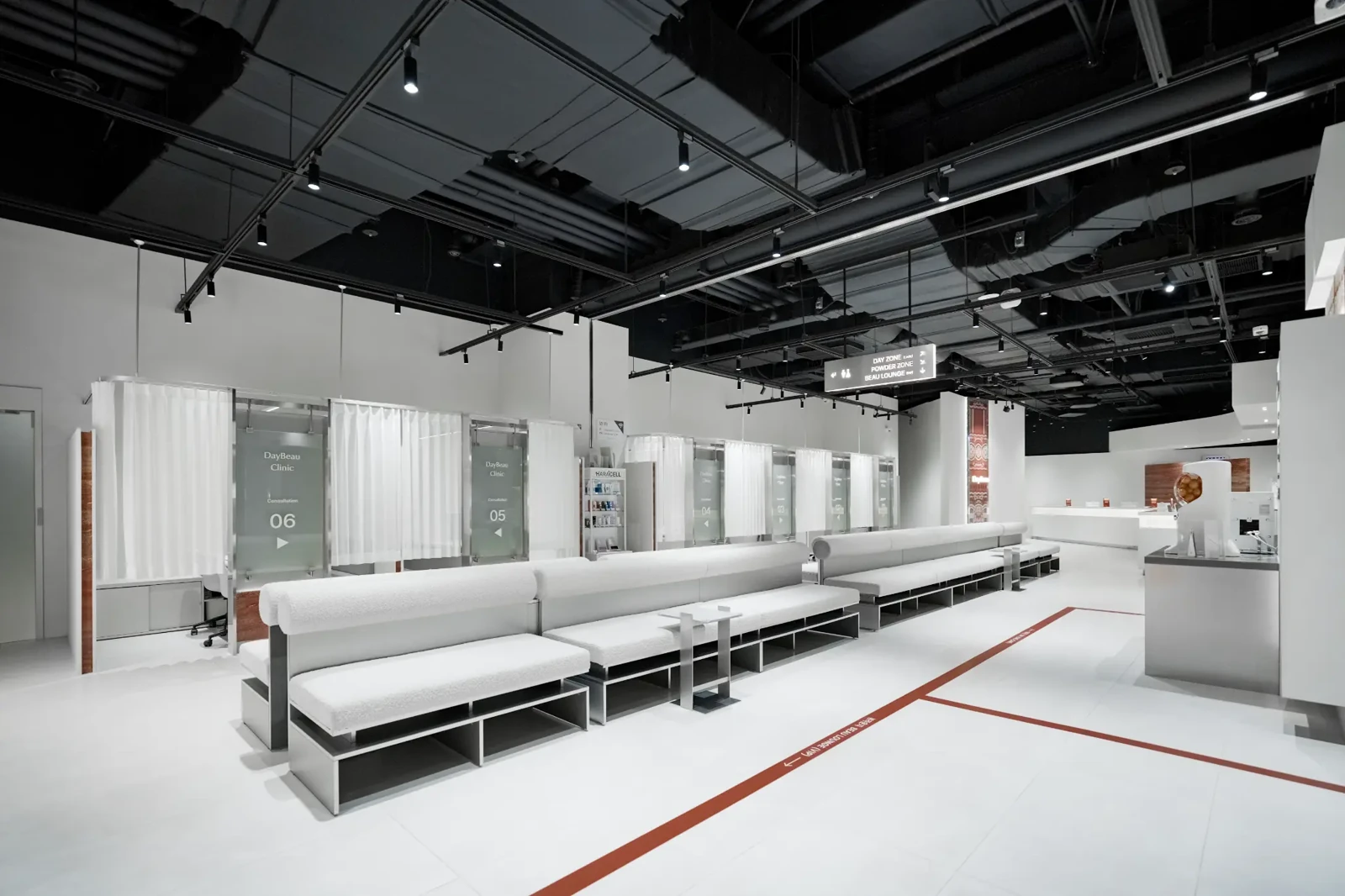
Actual clinic interior photograph; not a patient or treatment result.
Ask questions that connect a name to an actual plan
A named treatment can be a starting point for a conversation, but it is not a complete plan. Use your consultation to turn a broad interest into details you can understand. The answers should be specific to what the clinic is actually proposing for you.
Start with these questions:
- What concern and treatment area are we discussing?
- What exact product or device model is proposed, and what is its intended purpose in my plan?
- Is this use locally authorized for the proposed area? If not, how does that affect the conversation?
- What are the main alternatives, including waiting or choosing no procedure during this trip?
- What discomfort, visible changes, or aftercare should I realistically plan around?
- What are the limitations of the available evidence for this approach and this treatment area?
- How would I obtain assessment if I have a concern after I leave Seoul?
The goal is not to test the clinician or demand a guarantee. It is to make an informed decision with the details that matter. A clear answer may include uncertainty, particularly when evidence is limited, protocol-specific, or not directly applicable to the area you are considering.
If your interest is injectable skin quality, the Skin Booster consultation page explains why the exact product and injection plan should be identified before treatment. If your concern is facial contour, the Lip Filler consultation page is a starting point for questions about product, anatomy, risks, alternatives, and travel timing.
Do not let a treatment name replace device verification
International patients may encounter overlapping marketing terms, translated names, or a clinic-specific label that does not identify a model, handpiece, or authorized purpose. Ask for the exact item in the proposed plan. For energy-based care, that includes the platform, available applicator or tip where relevant, treatment area, and the reason it is being discussed for you.
This is especially important for “Titanium.” Alma describes Soprano Titanium Special Edition as a multi-wavelength diode laser platform for hair removal, with 755 nm, 810 nm, and 1064 nm wavelengths (Alma: Soprano Titanium Special Edition). That manufacturer description does not establish that a Korean “Titanium” treatment uses the same model, has a facial lifting purpose, or is authorized for a particular use. Hair-removal evidence should not be presented as evidence of facial lifting effectiveness.
Ask the clinic to verify the actual model, proposed purpose, local authorization, protocol, and applicable evidence before making a decision. The Titanium consultation page sets out the same distinction. If you are comparing broader lifting conversations, the Ultherapy consultation and Thermage consultation pages can help you prepare questions about the exact installed platform or generation; a treatment name alone does not confirm either.
Understand risks, limitations, and warning signs before scheduling
No aesthetic procedure is automatically appropriate or risk-free for every person. A responsible consultation should cover common short-term effects that may be relevant to the proposed procedure, more serious but less common complications, and the limitations of what can be predicted in an individual case. It should not promise a particular result or duration.
For dermal fillers, the FDA lists temporary effects such as bruising, redness, swelling, pain, tenderness, itching, and rash. It also describes less common and rare complications, including infection, nodules, tissue injury, and unintended injection into a blood vessel. Such vascular complications are uncommon but can be serious and may cause tissue damage, vision abnormalities, or stroke (FDA: Dermal Fillers). This is general risk information, not a statement about any person’s likelihood of a complication or a determination of Korean product authorization.
If you have an injectable procedure and experience unusual pain, vision changes, or skin near an injection site that looks white, gray, or blue during or shortly afterward, seek immediate medical attention. The FDA identifies these as warning signs that require urgent assessment. Do not wait for a routine follow-up message, and do not try to diagnose the problem from photos or social media.
For energy-based options, ask what type of reaction is relevant to the proposed modality, how the clinician will assess suitability, what aftercare is expected, and what would warrant contacting the clinic. The answer should match the actual device and treatment area, not a generic “lifting” category. This is also why shoulder filler should never be assumed to be standard, authorized for a given use, appropriate, or universally safe; it requires product-specific and anatomy-specific clinical discussion.
Plan your visit around follow-up, not just sightseeing
Myeongdong is convenient for visitors, but a convenient location does not replace aftercare planning. Daybeau Clinic Myeongdong Signature is at B1, 84 Namdaemun-ro, Jung-gu, Seoul, about a one-minute walk from Euljiro 1-ga Station Exit 6. Build in enough time to arrive unhurried, ask questions, and leave room in your itinerary if you decide you need more information before scheduling.
Before you travel, share your arrival date, possible consultation date, departure date, and any events you prefer not to plan around. Ask whether the conversation is realistically compatible with the time you will be in Seoul and what type of follow-up access would be needed if you proceed. If you are leaving soon, a clinician may reasonably advise more planning or a different timing.
The U.S. Centers for Disease Control and Prevention advises travelers to plan how they would obtain medical care during a trip, review insurance coverage, carry medication and prescription information, and keep a list of local doctors or hospitals (CDC: South Korea Traveler View). Those travel-health recommendations are not aesthetic-treatment guidance, but they are relevant to an international visitor who needs a plan if an unrelated health issue or a post-procedure concern arises.
Keep personal medical information private when making a booking request. The clinic’s form asks for information needed to respond to a consultation or visit request and specifically says not to include medical records, sensitive health details, or photos. More detailed information can be discussed through the clinic’s appropriate consultation process.
A practical plan for your Myeongdong consultation day
Start with the concern and decision you want to make. Then make sure the clinician has the information that could change that decision. You do not need to arrive knowing every device or product name. You do need enough time to ask for the details behind any name that is proposed.
A useful sequence is:
- State your main concern and priorities in simple terms.
- Share relevant treatment history and your travel dates.
- Ask what the clinic is proposing and why, including the exact product or device.
- Discuss alternatives, limitations, risks, aftercare, and follow-up before deciding.
- Take time to consider the information if you are uncertain.
This approach helps distinguish a thoughtful consultation from a rushed purchase. It also makes it easier to decide that the right option for this trip is consultation only. No online guide can replace an individual clinical assessment.
If you would like to begin that conversation, Request a consultation.
Keep the next step proportionate to your information
A Korea skin clinic consultation in Myeongdong should leave you with a clearer understanding of the proposed care, not pressure to act before you understand it. Confirm the exact product or model, the purpose of the plan, expected practical considerations, risks, and how travel affects follow-up. If an answer is unclear, ask for clarification or give yourself more time before deciding.
For a broader overview of the clinic’s approach before you contact the team, visit International Patients. This article is general educational information. It is not medical advice, diagnosis, or a substitute for a personal consultation.
Sources
- FDA: Dermal Fillers (Soft Tissue Fillers)
General dermal filler risk information, product- and site-specific considerations, and urgent warning signs following injection.
- CDC: South Korea Traveler View
General travel-health planning, including preparing for medical care, insurance, medications, and prescription information while abroad.
- Alma: Soprano Titanium Special Edition
Manufacturer description of Soprano Titanium as a multi-wavelength diode laser platform for hair removal, supporting the need to verify any separately named Korean “Titanium” use.
Frequently asked questions
What should I prepare for a Korea skin clinic consultation?
Prepare a short description of your concerns and priorities, relevant treatment history, any information the clinician may need to assess your situation, and your arrival and departure dates. Ask the clinic which details should be shared through its appropriate consultation process.
Can I decide on a treatment before my consultation in Myeongdong?
You can research and bring questions, but the exact product or device, intended purpose, alternatives, risks, and suitability should be discussed after an individual assessment. A consultation may appropriately end with more information or a decision not to proceed during your trip.
Where is Daybeau Clinic Myeongdong Signature?
The clinic is at B1, 84 Namdaemun-ro, Jung-gu, Seoul, Korea, about a one-minute walk from Euljiro 1-ga Station Exit 6. Confirm your visit details and availability directly with the clinic before making travel plans.
What should I know before discussing filler while traveling?
Ask about the exact product, intended use, proposed area, alternatives, aftercare, and follow-up plan. FDA guidance lists temporary effects such as bruising and swelling and describes rare but serious vascular complications. Seek immediate medical attention for unusual pain, vision changes, or white, gray, or blue skin near an injection site during or shortly after a procedure.
Does “Titanium” always mean a facial lifting treatment?
No. Alma describes Soprano Titanium as a laser hair-removal platform. A Korean treatment label using the word “Titanium” does not by itself establish the model, purpose, local authorization, or evidence for facial use. Ask the clinic to confirm those details for your proposed plan.